
Listeners:
Top listeners:
 play_arrow
 Cosoro Afrobeats UK's #1 Afrobeats Radio Station
 play_arrow
 Cosoro Pidgin Na we bi di #1 UK Pidgin Radio
 play_arrow
 Cosoro Evergreen UK's #1 Radio for Timeless African Sounds


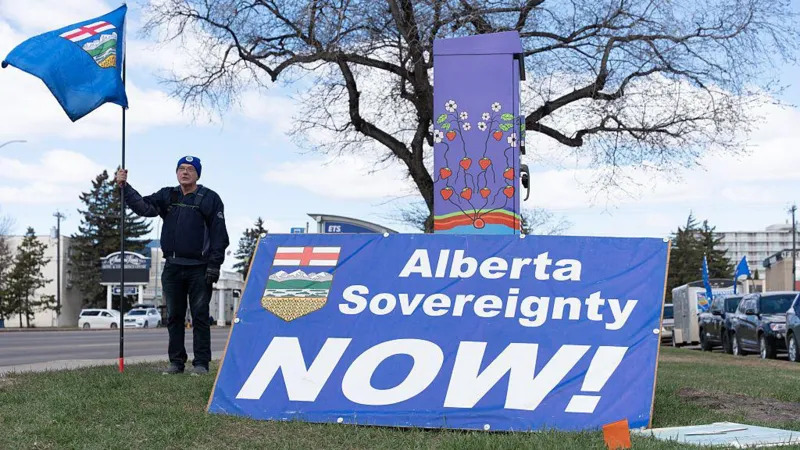
Image: AFP via Getty Images
A judge in Alberta has halted efforts to advance a referendum on the province separating from Canada, ruling that the government failed to consult Indigenous First Nations communities whose treaty rights could be affected by independence.
The landmark 37-page ruling was delivered in an Edmonton courtroom by Justice Shaina Leonard, dealing a major setback to the growing Alberta sovereignty movement and raising broader constitutional questions about Indigenous rights in Canada.
The legal challenge centered on a citizen-led petition organized by Stay Free Alberta, a separatist group that claims to have collected more than 300,000 signatures in support of holding a province-wide referendum on Alberta independence.
The number of signatures was reportedly enough to trigger the next stage of the referendum process under Alberta law. However, Justice Leonard suspended verification of the petition while considering arguments brought forward by several First Nations groups.
In her ruling, the judge concluded that Alberta authorities failed to properly consult Indigenous nations whose constitutional treaty rights could be directly impacted if the province were to leave Canada.
The applicants in the case included the Athabasca Chipewyan First Nation, Blood Tribe, Piikani Nation, and Siksika Nation.
Justice Leonard stated in the decision that Alberta’s separation from Canada would clearly affect treaties signed between Indigenous peoples and the Crown during the 19th century.
“As a matter of logic and common sense, there can be no doubt that Alberta’s secession from Canada will have an impact,” the judge wrote, referring to historic treaty agreements that remain constitutionally protected under Canadian law.
Despite the potential consequences, Leonard found that “no consultation occurred,” concluding that Alberta had breached its legal duty to consult with First Nations communities before allowing the referendum process to proceed.
The ruling marks a significant moment in the debate surrounding provincial sovereignty movements in Canada, particularly in resource-rich Alberta, where frustrations over federal policies, energy regulations, and economic control have fueled separatist sentiment in recent years.
Supporters of Alberta independence have long argued that the province contributes disproportionately to the national economy while receiving unfair treatment from the federal government in Ottawa. Calls for greater autonomy intensified after disputes over oil and gas regulations, carbon policies, and equalization payments.
However, Indigenous leaders have consistently warned that any attempt to redraw Canada’s constitutional framework without their involvement would violate treaty obligations and undermine Indigenous sovereignty.
Jeff Rath, the lawyer representing Stay Free Alberta, strongly criticized the ruling and signaled plans to challenge the decision in higher courts.
“We disagree fundamentally with the decision which appears on its face to violate principles of natural justice and contain numerous errors of law,” Rath said in a statement.
He later confirmed that the group intends to appeal and may also seek a court order temporarily suspending Justice Leonard’s ruling while legal proceedings continue.
Meanwhile, lawyers representing the First Nations groups celebrated the judgment as a major legal and constitutional victory.
Kevin Hille described the ruling as “a significant victory for the rule of law and the protection of constitutional rights in Alberta.”
“Justice Leonard’s decision today makes it clear that it was unlawful to turn away from the findings about the impacts on First Nations and to not consult with them before taking this perilous step of holding a referendum,” Hille said.
The decision is expected to have far-reaching political implications, not only for Alberta’s separatist movement but also for broader debates about Indigenous rights, constitutional law, and federalism in Canada.
Legal experts say the ruling reinforces the constitutional obligation governments have to consult Indigenous communities whenever actions may affect treaty rights — even in politically charged issues such as provincial independence.
For now, the court’s decision places Alberta’s separatist referendum plans on hold, while setting the stage for what could become a lengthy legal and political battle over the future of the province and its relationship with Canada.